Celebrating 10 Years of Microsoft and Red Hat Partnership: Hybrid Cloud and Enterprise Innovation
Brendan Burns details the transformative impact of the Microsoft and Red Hat partnership in hybrid cloud, open innovation, and enterprise modernization over the past decade.
Celebrating 10 Years of Microsoft and Red Hat Partnership: Hybrid Cloud and Enterprise Innovation
Overview
Over the past decade, Microsoft and Red Hat have revolutionized enterprise cloud services and open source innovation. Their partnership empowered organizations to modernize, automate, and secure workloads through Azure Red Hat OpenShift (ARO), Red Hat Enterprise Linux (RHEL), and integrated technologies from containers to AI platforms.
Key Milestones and Innovations
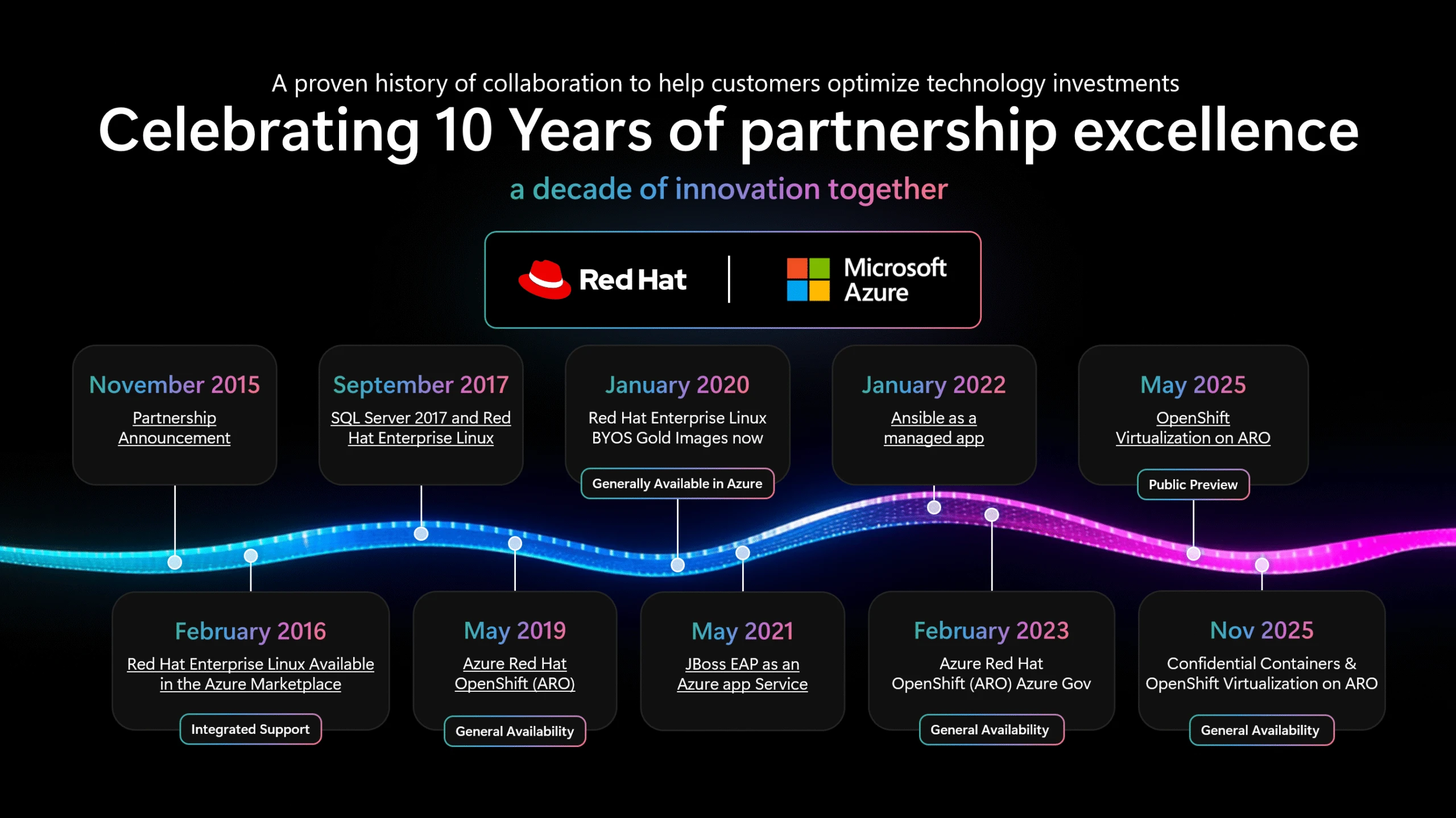
- 2015: Launch of partnership—RHEL available on Azure.
- General Availability: Azure Red Hat OpenShift, OpenShift Virtualization, and confidential containers, enhancing security and operational flexibility.
- Extending Reach: Red Hat solutions are accessible across Azure, including Azure Marketplace, Azure Government, and now regions supporting advanced hybrid workloads.
Customer Success Stories
- Teranet: Migrated mission-critical systems to Azure using OpenShift, saving CA$5.6 million and increasing customer confidence through automation and scalability.
- Bradesco: Leveraged Azure Red Hat OpenShift and integrated Azure OpenAI and Power Platform to support over 200 AI initiatives, streamlining governance and transformation in banking.
- Western Sydney University: Improved reliability and digital research for thousands using RHEL on Azure.
- Symend: Used ARO and Azure AI for region launches and personalized customer engagement at scale.
Technical Highlights
- Hybrid and Multicloud Innovation: Azure Red Hat OpenShift combines scalable cloud infrastructure with open source flexibility, supporting VMs and containers on one platform.
- Confidential Containers: Enable secure, hardware-enforced isolation for sensitive workloads.
- Open Source Integration: Contributions to Kubernetes, Linux kernel projects, and open hybrid architectures promote technical choice and collaboration.
- Automation: Red Hat’s Ansible Automation Platform is adopted by Microsoft to manage endpoints and modernize IT operations.
- Pricing and Cost Optimization: Azure Hybrid Benefit for RHEL, pay-as-you-go pricing, and MACC provide financial efficiency alongside technical capabilities.
Security and Compliance
- Confidential Workloads: Confidential containers and enhanced security for compliance-critical industries.
- Governance: Integration of AI and automation within secure, governed environments.
- Enterprise Grade Support: Joint engineering and integrated support simplify modernization.
Looking Ahead
Microsoft and Red Hat continue to push boundaries in open source, cloud-native development, and AI-powered enterprise solutions. Ongoing projects include support for HPC workloads on RHEL, innovation in hybrid cloud orchestration, and broader adoption of secure, flexible architectures.
Resources
- Azure Red Hat OpenShift
- Bradesco Customer Story
- Azure OpenAI Service
- Red Hat Ansible Automation Platform
- Unlock what is next: Microsoft at Red Hat Summit 2025
Image: Timeline of Microsoft and Red Hat Collaboration Source
Author
Brendan Burns, Corporate Vice President, Microsoft Cloud Native
This post appeared first on “The Azure Blog”. Read the entire article here